What EFT is
The Emotional Freedom Technique (EFT) is a therapy that combines both cognitive and somatic elements. Developed in 1995 by Gary Craig, EFT — also known as Tapping — brings together ancient Chinese acupressure and modern psychology. It's a brief intervention combining elements of exposure, cognitive therapy, and somatic stimulation of acupressure points on the face and body.
It can be used as a stress-relief tool for emotions and minor discomfort. You tap on the acupressure points as you guide yourself through phrases targeted to your current issue. It's simple on the surface — and also more nuanced, because it can be used to work with deep-rooted emotions and past experiences.
How it works
EFT has you stimulate 13 acupressure points with your fingertips while focusing your mind on a stressful event or feeling. First, you bring attention to the distressing memory or symptom. Then, together, we move through voicing specific statements while tapping on a series of acupressure meridian points.
This pairing appears to reduce stress while stimulating the processing of previously stuck emotions and habit patterns — in effect, re-training your body to respond with calm, rather than alarm, to difficult experiences.
How it helps the mind and regulation
What makes EFT compelling is that it works on several levels at once. While it engages the body's energy system (the same meridians used in acupuncture — though with no needles), it can also be understood as a somatic, neurophysiological approach that directly affects the nervous system.
When you recall something distressing, the brain's alarm center — the amygdala — fires and the body shifts into fight-or-flight. Tapping appears to send a calming, regulating signal to the brain at the same moment, helping to down-regulate that stress response. Neuroscience studies suggest EFT can rapidly settle the brain's emotional centers and lower cortisol, the body's primary stress hormone.
Amygdala down-regulation — pairing the memory with a safety signal calms the brain's threat response.
Lower physiological arousal — research links EFT to reduced cortisol and a shift out of fight-or-flight.
A wider window of tolerance — over time, the system learns it can feel a charge and still stay regulated.
Cognitive reframing — the spoken statements add mindfulness and a kinder, updated self-narrative.
It's genuinely a multilevel approach — combining cognitive reframing, affirmation, mindfulness, and somatic regulation. That blend is part of why people often feel a noticeable shift in how charged a memory or worry feels, sometimes quite quickly.
EFT & memory reconsolidation
One of the most exciting ideas in current emotional-healing research is memory reconsolidation — and it offers a compelling lens for why EFT can work.
Here's the basic idea. Once a memory is stored, it isn't fixed in stone. When we bring a memory fully back to mind, it can briefly become “editable” again — entering a short, malleable window. If, during that window, the brain encounters an experience that contradicts the original emotional learning (a felt sense of safety where there was once threat), the memory can be re-stored with a different emotional charge. The event is still remembered; it simply no longer carries the same intensity.
EFT seems to make good use of this. By recalling a distressing memory (reactivating it) while simultaneously tapping to send calming, safety signals to the nervous system, EFT may create exactly the kind of mismatch experience reconsolidation requires — the brain expects distress, but the body registers calm. Over repetitions, the emotional learning attached to that memory can update and soften.
1. Reactivate — bring the troubling memory or feeling vividly to mind.
2. Mismatch — tap to introduce a felt sense of safety while the memory is active.
3. Re-store — the memory settles back with a lower emotional charge.
This same reconsolidation principle is thought to underlie several of the most effective experiential therapies — including Brainspotting and other bottom-up methods. It's part of why these approaches can reach shifts that insight alone often can't. The reconsolidation research is still developing, but it gives a credible, neuroscience-grounded explanation for what many people experience as a surprisingly lasting change.
A note from me
I'll be honest: the first time I saw EFT, I thought it was too far out — even for me, and I'm pretty open-minded! I ignored it for about eight years. Then, during a very stressful time, a friend who used it in her practice encouraged me to try it, and I thought, what the heck. To my surprise, it worked. When I later learned the science behind the “silly tapping,” it clicked — if I'd been shown the why first, I'd have been far more open to it.
Our culture shapes so much of what we're willing to accept. Even though I've long studied energy systems, I also grew up in a very Western framework — and it's natural to be skeptical of anything outside our “normal.” So if you feel doubtful, I completely understand. The good news is that you don't have to believe in meridians for EFT to help: it can be understood purely as a somatic, nervous-system approach — and the research has grown remarkably.
Research & evidence
Energy psychology is a relatively young field, yet its evidence base continues to grow in both quantity and quality. As of August 2020, more than 115 research studies, 5 meta-analyses, and 13 review articles had been published on these methods in peer-reviewed journals — researched by over 200 investigators across more than 12 countries. EFT is now considered an evidence-based practice.
Studies indicate EFT can reduce stress, anxiety, depression, and pain, and can rapidly calm the brain's emotional centers. A few representative areas of research:
Clinical EFT improving multiple physiological markers of health — including a measured drop in cortisol.
EFT and resiliency in veterans at risk for PTSD, and effectiveness in the treatment of PTSD.
Systematic reviews and meta-analyses of randomized trials for depression and for anxiety.
For the full, regularly-updated research database, see the Association for Comprehensive Energy Psychology research collection.
Videos
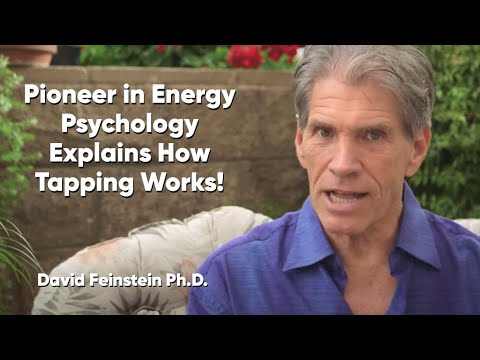
A couple of short videos on how and why EFT works — including Dr. Peta Stapleton on the science behind tapping.
Resources
If you'd like to learn the basic point sequence on your own, this is the overview I recommend:
Helpful basic EFT manual (PDF) — a clear overview of the points and process.